After the Tamiya Grasshopper, my first RC car, sparked a lifelong passion, I knew I wasn’t done. The thrill of driving, wrenching, and racing had sunk its hooks deep into me. But as much as I loved the Grasshopper, I found myself craving more. More power, more speed, and—most importantly—more control. That’s when I set my sights on the Tamiya Hotshot, the RC car that promised to take my hobby to the next level.
The Dream of 4WD
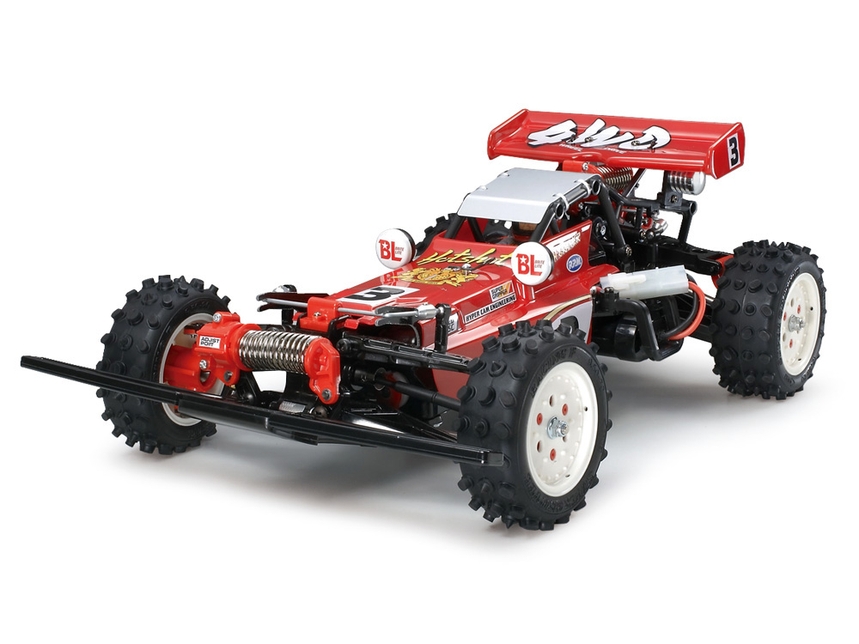
The Hotshot wasn’t just any RC car. Released in 1985, it was Tamiya’s first-ever 4WD off-road buggy, a game-changer in the world of RC. With its shaft-driven 4WD system, monocoque chassis, and independent suspension, the Hotshot was a beast built for performance. Compared to the 2WD Grasshopper, it was like comparing a sports car to a high-performance rally machine. I was hooked on the idea of having that kind of power and precision at my fingertips.
But there was a catch—the Hotshot was a lot more expensive than the Grasshopper. As a kid with a newspaper route and a few lawn mowing jobs, coming up with the cash wasn’t going to be easy. But I was determined.
The Grind to Save
As with the Grasshopper, I spent hours meticulously assembling the Hotshot. This build was more complex, with its advanced drivetrain and suspension system, but I was up for the challenge. I carefully followed the instructions, greased all the gears, and made sure that the drive shaft running from the rear to the front was properly placed—ready to bring all four of those knobby wheels to life. When I took the Hotshot for its first spin in front of my house on the pavement, the sound those tires made as they dug into the turns was pure music to my ears—a beautiful chattering that spoke to the precision and power of the 4WD system. I was blown away by the difference. The 4WD provided incredible control, especially on rough terrain. It was faster, more responsive, and handled like a dream.
Racing the Hotshot was a whole new experience. Whether it was tearing across the yard, taking on the neighbor’s Tamiya Frog, or navigating tricky trails, the Hotshot handled it all with ease. The car’s suspension soaked up bumps that would have sent the Grasshopper flipping. The power from the 540 motor combined with the 4WD system made it feel unstoppable.
My First Real Wrenching Challenge
However, the car’s suspension, while impressive at first, revealed a weak point. Whenever the Hotshot caught air and then landed, the front spring on the uni-shock just wasn’t strong enough to keep the undercarriage from slamming into the ground. This impact caused additional drag and slowed the car down after each high-flying jump. It became my first real challenge—figuring out how to improve the suspension.
At the time, I didn’t find a really good solution to the suspension issue and instead chose to continue enjoying the Hotshot as it was. I embraced its strengths and worked around its weaknesses, making the most of the incredible control and performance it offered despite the occasional setback. Meanwhile, Tamiya was hard at work addressing these very concerns. They first introduced the Hotshot II, which featured an improved rear suspension to tackle the problems I had experienced. Building on this, in 1986, Tamiya eliminated the problematic suspension entirely with the launch of the Super Shot, delivering a more robust and reliable system. By the time these enhancements arrived, though, I had begun to drift away from RC cars. New passions had captured my attention—full-scale motorcycles, new friendships with girls, and a variety of other interests that pulled me in different directions. Nonetheless, the Hotshot remained a cherished part of my RC journey, a testament to the ever-evolving nature of the hobby and the continuous quest for improvement.
A New Standard
The Hotshot set a new standard for what I expected from RC cars. It wasn’t just about the thrill of speed anymore—it was about precision, control, and the satisfaction of mastering a more complex machine. The Hotshot pushed me to learn more about tuning, maintenance, and driving techniques. It wasn’t just a toy; it was a machine that demanded respect and rewarded skill.
Looking back, the Hotshot was a pivotal moment in my RC journey. It was the car that showed me just how deep this hobby could go, and it set the stage for everything that came after. The lessons I learned from building, maintaining, and racing the Hotshot would stick with me for years to come, shaping the way I approached every RC car that followed.
And it all started with a dream, a summer of hard work, and the determination to take my hobby to the next level.
— Coby R



 Rapid Rhino RC
Leave a comment