When setting up or upgrading your 1/10th scale RC car, choosing the right battery connector is crucial for ensuring optimal performance, safety, and compatibility. The connector facilitates the transfer of power from the battery to the motor and other electronic components. Selecting the appropriate connector involves considering factors such as current handling capability, ease of use, durability, and compatibility with your equipment.
Below is a comprehensive overview of the most commonly used battery connectors for 1/10th scale RC cars today.
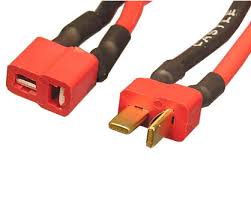
Deans (T-Plug) Connector
Overview
The Deans connector, also known as the T-Plug due to its shape, has been a long-standing favorite in the RC community. It features a compact design with two flat, gold-plated connectors housed in a durable plastic casing.

Current Rating: Approximately 60 Amps continuous.
Advantages
- High Current Handling: Suitable for most 1/10th scale applications, providing efficient power transfer without significant voltage drop.
- Compact Size: The small form factor makes it ideal for installations where space is limited.
- Secure Connection: Provides a tight and reliable connection, minimizing the risk of disconnection during operation.
Disadvantages
- Soldering Difficulty: Requires careful soldering skills due to the lack of soldering tabs and proximity of the connectors, which can lead to accidental shorts during assembly.
- No Polarization Protection: It’s possible to connect them incorrectly if not careful, potentially causing damage to your equipment.
Common Usage
Widely used across various RC applications, including cars, boats, and planes, especially among hobbyists who prefer a compact and efficient connector.
Deans Micro Connector
The Deans Micro Connector, often referred to as the 2S 2R Micro Connector, is a smaller version of the traditional Deans connector. This connector is specifically designed for applications where space and weight are critical, making it a popular choice in micro RC vehicles, drones, and other compact electronics where every gram counts.

Key Features
- Ultra-Compact Design: The Deans Micro Connector is significantly smaller than the standard Deans T-Plug, making it ideal for micro and mini RC models where space constraints are a primary concern.
- Lightweight: In addition to its compact size, the Deans Micro Connector is lightweight, helping to keep the overall weight of your RC setup to a minimum. This is crucial for maintaining performance in micro RC models.
- Current Handling: The Deans Micro Connector can safely handle currents up to approximately 12-15 amps. This makes it suitable for low to moderate power applications, particularly in smaller RC models where the current draw is relatively low.
- Reliable Connection: Like its larger counterpart, the Deans Micro Connector is known for providing a secure and reliable connection, reducing the risk of power loss during operation.
Why It Matters
The Deans Micro Connector is an excellent choice for hobbyists working with small-scale RC models or other compact electronic projects. Its ability to deliver a stable power connection without adding unnecessary bulk makes it particularly valuable in applications where size and weight are limiting factors.
Considerations
- Soldering Precision: Due to the small size of the Deans Micro Connector, precise soldering is required to ensure a strong, reliable connection. Hobbyists should use fine-tipped soldering tools and take extra care during the process to avoid damaging the connector.
- Current Limitations: With a maximum current handling capacity of 12-15 amps, the Deans Micro Connector may not be suitable for higher current draws typical in larger RC models. It’s important to assess the current requirements of your specific setup before choosing this connector.
Conclusion on Deans Micro Connector
The Deans Micro Connector is a specialized connector that excels in applications where space and weight are at a premium. Ideal for micro RC vehicles, drones, and other small electronics, this connector offers a reliable and efficient power connection without compromising on performance. When working in tight spaces or on weight-sensitive projects, the Deans Micro Connector is a solid choice that meets the demands of modern, compact RC setups.
XT60 Connector
Overview
The XT60 connector features a yellow nylon casing with two bullet connectors molded inside. It is designed for easy and secure connections and has become increasingly popular in recent years.

Current Rating: Up to 60 Amps continuous.
Advantages
- Easy to Solder: The design includes soldering tabs that make the soldering process more straightforward and safer.
- Secure and Polarized Connection: The connectors are designed to prevent reverse polarity connections, enhancing safety.
- Durable Construction: The nylon material is heat-resistant, reducing the risk of deformation during soldering.
Disadvantages
- Size: Slightly larger than Deans connectors, which may be a concern in very tight installations.
- Compatibility: May require adapters if your existing equipment uses different connector types.
Common Usage
Popular in electric RC cars, drones, and airplanes, especially in setups where ease of use and safety are prioritized.
XT90 Connector
Overview
The XT90 is essentially a larger version of the XT60, designed for applications requiring higher current handling.

Current Rating: Up to 90 Amps continuous.
Advantages
- High Current Capacity: Suitable for high-performance setups that demand more power.
- Secure and Polarized: Like the XT60, it prevents incorrect connections and provides a reliable link.
- Robust Build: Durable and heat-resistant, making it suitable for demanding applications.
Disadvantages
- Size and Weight: Larger and heavier than XT60 and Deans connectors, which may not be necessary for standard 1/10th scale applications.
- Compatibility: Less common in 1/10th scale RC cars, which might necessitate adapters.
Common Usage
Ideal for larger scale RC vehicles and high-power applications where increased current handling is required.
EC3 Connector
Overview
The EC3 connector consists of two 3mm bullet connectors enclosed in a blue plastic housing. It offers a balance between size and current handling capability.

Current Rating: Up to 60 Amps continuous.
Advantages
- Easy Assembly: Features solder cups for straightforward and secure soldering.
- Secure Connection: The connectors snap together firmly, preventing accidental disconnections.
- Polarized Design: Eliminates the risk of reverse polarity connections.
Disadvantages
- Bulkier than Deans and XT60: May be slightly larger, affecting installation in tight spaces.
- Limited Availability: Not as widely available as some other connector types, potentially limiting options for replacements and accessories.
Common Usage
Commonly used in Horizon Hobby products and popular among users who prioritize ease of assembly and secure connections.
EC5 Connector
Overview
The EC5 connector is the larger counterpart to the EC3, featuring 5mm bullet connectors for higher current applications.

Current Rating: Up to 120 Amps continuous.
Advantages
- High Current Handling: Suitable for high-performance and high-demand setups.
- Secure and Reliable: Provides a robust and stable connection, minimizing power loss.
- Polarized and Safe: Designed to prevent incorrect connections, enhancing safety.
Disadvantages
- Size: Larger and heavier, which may be unnecessary for standard 1/10th scale applications.
- Compatibility: Less common in smaller scale models, potentially requiring adapters.
Common Usage
Typically used in larger scale RC models and high-powered setups where maximum current transfer is essential.
Traxxas High-Current Connector
Overview
Specifically designed by Traxxas for their RC models, these connectors feature a unique design with large surface area contacts enclosed in a black plastic housing with red accents.
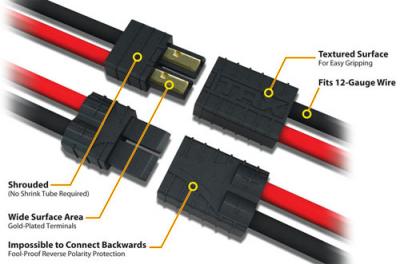
Current Rating: Up to 100 Amps continuous.
Advantages
- Excellent Current Transfer: Large contact areas ensure efficient power delivery with minimal resistance.
- Easy to Use: Designed for quick and secure connections and disconnections.
- Integrated Balance Lead: Some versions incorporate balance connectors for charging LiPo batteries, simplifying the charging process.
Disadvantages
- Proprietary Design: Mainly compatible with Traxxas products; using them with other brands may require adapters.
- Soldering Complexity: Can be slightly more challenging to solder compared to connectors like XT60 due to the design.
Common Usage
Predominantly used in Traxxas RC vehicles but can be adapted for use in other models if desired.
Tamiya Connector
Overview
One of the oldest and most recognizable connectors, the Tamiya connector features a white plastic housing with flat metal contacts.

Current Rating: Approximately 15-20 Amps continuous.
Advantages
- Widely Available: Easy to find and commonly included in many entry-level RC models.
- Simple Design: Easy to connect and disconnect without much effort.
Disadvantages
- Low Current Capacity: Not suitable for high-performance applications; can lead to overheating and power loss.
- Less Reliable Connection: Contacts can become loose over time, leading to intermittent connections.
- Outdated: Largely replaced by more efficient and safer connectors in modern RC setups.
Common Usage
Found in older or budget-friendly RC models; often replaced with better-performing connectors in upgraded setups.
JST Connector
Overview
JST connectors are small red connectors commonly used for low-current applications, featuring two pins enclosed in a compact housing.
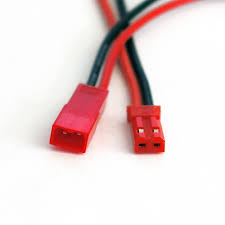
Current Rating: Approximately 5 Amps continuous.
Advantages
- Compact Size: Ideal for tight spaces and small-scale electronics.
- Easy to Use: Simple plug-and-play design makes for quick connections.
Disadvantages
- Low Current Handling: Not suitable for most 1/10th scale RC car applications that require higher currents.
- Fragile: The small size makes them more prone to damage and wear.
Common Usage
Typically used for powering receivers, small electronics, and low-power accessories rather than main battery connections in RC cars.
Anderson Powerpole Connector
Overview
Anderson Powerpoles are modular connectors that can be configured in various arrangements, featuring silver-plated contacts and durable plastic housings.

Current Rating: Varies by size; commonly used 15/30/45 Amp versions are available.
Advantages
- Modular and Versatile: Can be arranged in different configurations and colors for easy identification.
- Durable and Reliable: Designed for repeated connections and disconnections without significant wear.
- Low Resistance: Provides efficient power transfer with minimal voltage drop.
Disadvantages
- Bulkier than Some Alternatives: May take up more space compared to connectors like Deans or XT60.
- Less Common in RC Cars: Not as widely adopted in the RC car community, leading to potential compatibility issues.
Common Usage
Used in various electrical applications, including some RC setups, particularly where customization and durability are prioritized.
Choosing the Right Connector
When selecting a battery connector for your 1/10th scale RC car, consider the following factors:
- Current Requirements: Ensure the connector can handle the maximum current your setup will draw to prevent overheating and power loss.
- Compatibility: Choose a connector that matches your existing equipment or be prepared to replace or adapt other connectors in your system.
- Ease of Use: Consider how easy it is to solder and connect/disconnect the connector, especially if you frequently swap batteries.
- Size and Weight: For tight installations, opt for a compact connector that fits comfortably within your RC car’s chassis.
- Safety: Select connectors with features that prevent reverse polarity connections and provide secure, reliable contacts.
- Availability: Choose connectors that are readily available and have widespread support in the RC community for ease of replacement and support.
Conclusion
Choosing the right battery connector is crucial for maximizing performance and ensuring safety in your 1/10th scale RC car. Modern connectors like the XT60 and Deans have become industry standards, offering an excellent balance of size, current handling, and reliability. To ensure efficient power delivery and reduce the risk of failure, always make sure your connectors are properly soldered and well-maintained.
In today’s advanced RC setups, a single battery may not suffice for all your needs. It’s equally important to use the right connectors for auxiliary components like lights, winches, or other accessories. Ensuring that each connection is suited to its specific purpose not only optimizes power transfer but also enhances the overall functionality and longevity of your RC equipment.
If you’re still using outdated or inadequate connectors like Tamiya, consider upgrading to more efficient options to improve performance and reliability. The right connector will provide efficient power delivery, safeguard your components, and contribute to a seamless RC experience. Assess your specific needs and choose connectors that align with both your primary power source and any additional accessories to achieve the best results.
— Coby R




 Rapid Rhino RC
Leave a comment