
Tamiya has long been a revered name in the world of radio-controlled (RC) vehicles, known for their innovation, quality, and a diverse lineup that has captured the imaginations of hobbyists for decades. The evolution of Tamiya’s RC lineup is a fascinating journey through the history of RC cars, marked by groundbreaking designs, technological advancements, and a commitment to both performance and fun. Beyond their dominance in RC cars, Tamiya has also played a significant role in the military RC category, creating highly detailed and functional models that have become staples for enthusiasts of scale military vehicles—a topic worthy of its own exploration in a future article.
Throughout this article, I’ve linked to TamiyaBase.com, an incredible resource created by Lars Butveit. It’s a must-visit for anyone in the RC community. Huge thanks to Lars for building such a valuable hub of information!!
The 1970s: Laying the Foundations
Tamiya’s foray into the RC world began in the mid-1970s, a time when the concept of hobby-grade RC cars was still in its infancy. Their first release, the Porsche 934 Turbo RSR in 1976, set the stage for what was to come. This 1/12 scale on-road car was not only Tamiya’s first RC vehicle but also the world’s first RC kit car, allowing enthusiasts to build their own models from scratch. The Porsche 934 Turbo RSR was followed by other highly detailed models, such as the Toyota Hilux High-Lift in 1978, which pushed the boundaries of realism in RC vehicles.
The 1980s: Revolutionizing RC Racing
The 1980s saw Tamiya firmly establish itself as a leader in the RC industry, particularly in the off-road segment. The release of the Sand Scorcher in 1980 marked Tamiya’s entry into the world of off-road buggies, a genre that would soon dominate the RC landscape. This model was iconic for its detailed Volkswagen Beetle body and rugged performance on rough terrain.

Tamiya’s influence on RC racing was solidified with the introduction of the Frog in 1983, a 1/10 scale buggy designed specifically for off-road competition. The Frog was soon followed by other legendary models like the Grasshopper (1984, my first RC Car) and the Hotshot (1986, ), the latter being Tamiya’s first 4WD off-road buggy, which set new standards for performance and durability. The Clod Buster (1987) was another standout, becoming an instant favorite with its massive size and realistic monster truck design.

The 1990s: Innovation and Expansion
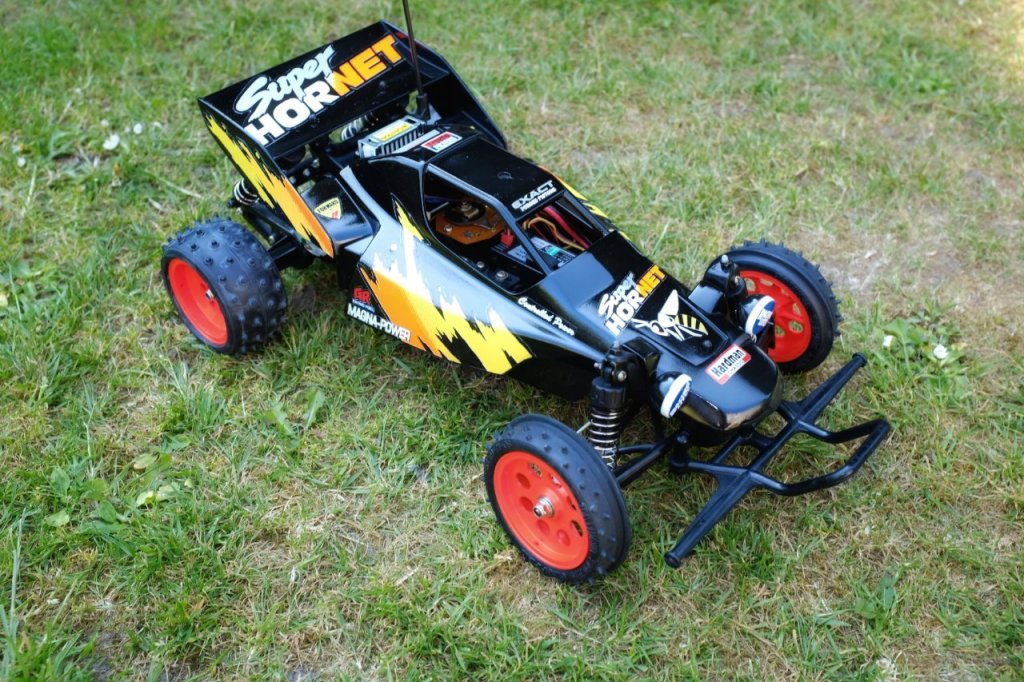
As the RC market matured in the 1990s, Tamiya continued to innovate and expand its lineup. The Avante (1990) was a high-end 4WD buggy that featured advanced materials and a unique suspension system, catering to serious RC racers. Meanwhile, the Super Hornet (1992) provided an accessible yet high-performing option for beginners and casual hobbyists.

Tamiya’s on-road chassis also gained popularity during this decade, with the TA-02 (1996) becoming a versatile platform for both racing and scale modeling. The TA-02’s adaptability led to numerous variations and adaptations, making it a favorite among RC enthusiasts.

The 2000s: Modern Classics
The new millennium saw Tamiya continue to build on its legacy with a mix of innovation and nostalgia. The TB-01 (2001) and TT-01 (2005) chassis were significant releases, offering durable and user-friendly platforms for both rally cars and on-road racing. The TT-01, in particular, became a staple for beginners due to its ease of assembly and reliable performance.
Off-road buggies also saw a resurgence with the DF-03 (2007), a chassis designed for competition that offered high performance at a reasonable cost, making it accessible to a broader audience.
The 2010s: A Blend of Tradition and Technology
In the 2010s, Tamiya embraced both its heritage and the latest technological advancements. The XV-01 (2011) introduced a front-motor layout designed specifically for rallying, allowing for realistic handling on rough terrain. The TT-02 (2016) updated the classic TT-01 chassis, providing improved performance and adjustability while maintaining its beginner-friendly nature.
Tamiya also tapped into the fun and casual side of the hobby with releases like the Dancing Rider (2017), a three-wheeled vehicle that offered a unique driving experience with its tilting mechanism. Meanwhile, the Comical Hotshot (2020) brought a playful, cartoonish twist to the classic Hotshot design, appealing to both new and nostalgic hobbyists.


The 2020s: Continuing the Legacy
As Tamiya moves into the 2020s, it continues to innovate while paying homage to its storied past. The TD-4 Super Avante (2021) is a perfect example of this, reimagining the classic Avante with modern engineering and updated performance, all while retaining the iconic design that made the original a legend.
Conclusion
The evolution of Tamiya’s RC lineup is a testament to the brand’s ability to adapt, innovate, and inspire. From pioneering the concept of RC kit cars in the 1970s to pushing the boundaries of performance and realism in the decades that followed, Tamiya has remained at the forefront of the RC world. Whether you’re a seasoned racer, a scale model enthusiast, or someone who just loves the thrill of driving an RC car, Tamiya’s diverse lineup offers something for everyone, ensuring that their legacy will continue for many years to come. Stay tuned for a deeper dive into Tamiya’s contributions to the RC military vehicle category, where their commitment to detail and functionality has made them a favorite among collectors and military enthusiasts alike.



 Rapid Rhino RC
Leave a comment