When it comes to RC (remote control) cars, the scale of your vehicle is more than just a number—it’s a critical factor that influences how your car performs, what terrain it excels on, and even how much fun you’ll have driving it. Whether you’re a beginner or a seasoned enthusiast, understanding the importance of scale can help you make more informed decisions and get the most out of your RC experience. In this post, we’ll take a deep dive into why scale matters, exploring everything from performance and terrain compatibility to personal preferences.
What is RC Car Scale?
RC car scale refers to the size ratio of the model compared to its real-life counterpart. For example, an accurate 1/10 scale RC car is one-tenth the size of the actual vehicle it’s modeled after. Scales can range from as small as 1/64 to as large as 1/5, with each offering a unique driving experience.
Common Scales:
- 1/64 Scale and Smaller: Extremely compact, these RC cars are often used for tabletop racing or collected as miniatures. This is typically the scale of Matchbox and Hot Wheels cars, making them great for collectors and those looking for casual, space-saving fun.
- 1/24 Scale: Small and highly detailed, 1/24 scale is ideal for indoor use and collectors who appreciate intricate designs. This scale benefits from the wide availability of model car kits, allowing enthusiasts to retrofit various car bodies onto their RC chassis, making it a versatile choice for hobbyists.
- 1/18 Scale: Compact and more affordable, 1/18 scale models are suitable for both indoor and outdoor use, making them versatile for various environments. They are easier to work on than smaller scales and offer a good balance between size and functionality, with plenty of options for customization.
- 1/10 Scale: The most popular scale in the RC world, 1/10 scale offers an excellent balance of size, performance, and versatility. This scale provides the widest range of options, from off-road buggies to on-road racers, making it the go-to choice for those who want to experience all aspects of RC driving without being limited in options.
- 1/8 Scale: Larger and more powerful, 1/8 scale models are often used for competitive racing and off-road driving. These models are built to be tougher, faster, and more durable, with bigger batteries and stronger components, making them ideal for serious enthusiasts looking for high-performance action.
- 1/5 and 1/6 Scale: These extra-large models offer unparalleled realism and performance, favored by enthusiasts who prioritize detail and power. The sheer size and weight of these vehicles mean they can cause serious injury or damage if they hit someone or something.
Common RC Car Scales and Their Uses
Let’s break down some of the most common RC car scales, their uses, and important considerations such as weight and safety:
1/64 Scale and Smaller
- Weight Range: Typically under 0.1 pounds.
- Description: Extremely compact and often used for tabletop racing or collected as miniatures. This scale is common for Matchbox and Hot Wheels cars, as such most RCs in this range are more in the toy department than hobby, but there are a few exceptions (I ordered an FMS ALU35, while writing this article, stay look forward to a post and video for that in the future.).
- Uses: Ideal for collectors and casual, space-saving fun

1/24 Scale
- Weight Range: Approximately 0.2 to 0.5 pounds.
- Description: Small, highly detailed, and perfect for indoor use and some outdoor use or for collectors who enjoy intricate designs. The scale is popular because many model car kits are available in this size, offering a range of retrofit body options.
- Uses: Suitable for indoor tracks and display collections, and offroad in limited space or over in-house obstacle courses. Another bonus is because of their size they are easy to store, transport, and keep around. No where near the space commitment that 1/10 scale vehicles or larger become.

1/18 Scale
- Weight Range: Approximately 1 to 2 pounds.
- Description: Compact and more affordable, 1/18 scale models are versatile for both indoor and outdoor use. They are easier to work on and offer a good balance between size and functionality.
- Uses: Great for indoor tracks, casual outdoor driving, and beginner RC enthusiasts, the 1/18th scale also makes for great ATV or small 1/10 scale vehicles that are fully functional. Your imagination is the limit!

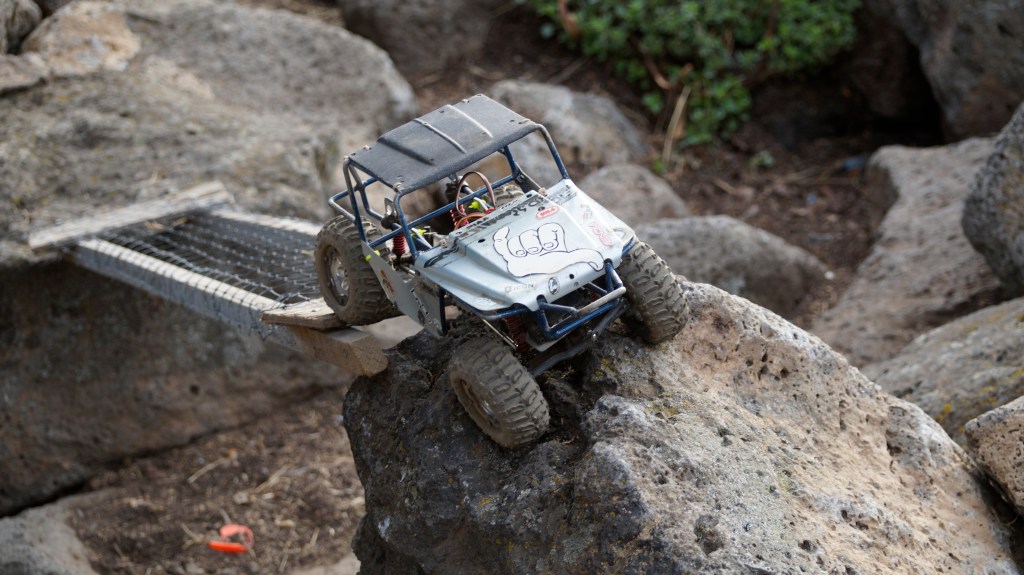
1/10 Scale
- Weight Range: Typically 3 to 7 pounds.
- Description: The most popular scale due to its balance of size, performance, and versatility. It offers a wide range of options, from off-road buggies to on-road racers.
- Uses: Perfect for both on-road and off-road driving, making it the go-to scale for most RC hobbyists. Also a great scale for doing realistic detail, including drivers, passengers, gear, and even scale RCs.
- Safety Note: Hitting a person or a pet with one of these can cause injury, so always exercise caution when operating.


1/8 Scale
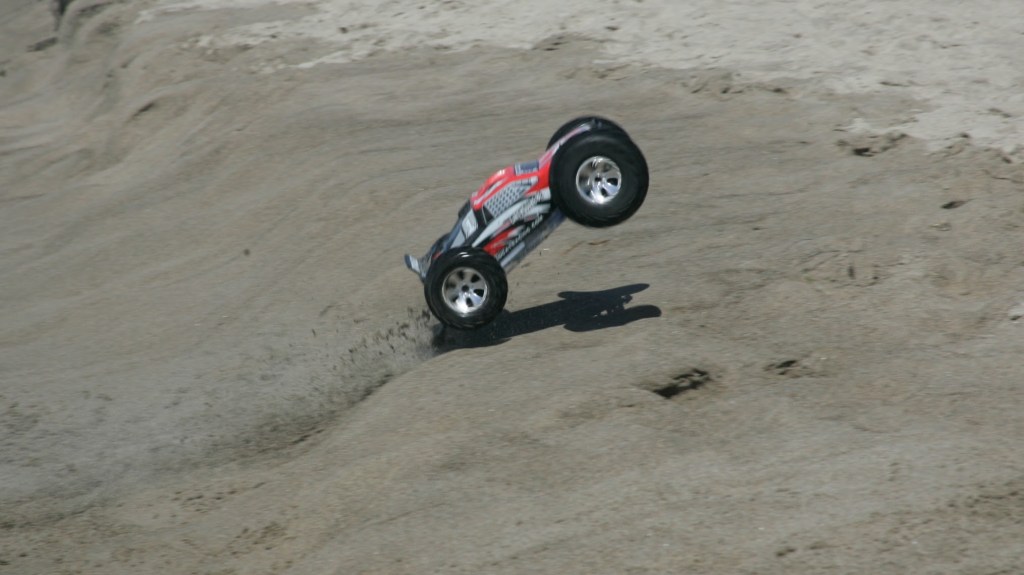
- Weight Range: Typically 7 to 12 pounds.
- Description: Known for their size and power, 1/8 scale cars are often used in professional racing environments. They are built to handle rougher terrains with ease.
- Uses: Ideal for outdoor tracks, off-road bashing, and competitive racing. This scale for me has been less about detail and more about bashing and wrenching. My Redcat Earthquake 8E has had nearly every part on it broken at one point or another, because I drive it hard, and it’s relatively cheap to repair (yes I do have a fairly deep stock of parts for it).
- Safety Note: Due to their size and speed, 1/8 scale RC cars can cause significant injury if they collide with a person or pet. Always be cautious when driving them near others.
1/5 and 1/6 Scale
- Weight Range: Typically 20 to 30 pounds or more.
- Description: These are the heavyweights of the RC world, offering incredible detail and power. Their size allows for more realistic features and superior performance.
- Uses: Best suited for large-scale racing or enthusiasts who enjoy detailed, realistic models. However, they require more space and a bigger budget. This is the one scale I have yet to spend time with, their size, weight, space, and budget requirements just haven’t been right for me, yet.
- Safety Note: Extreme caution is required when driving these models, especially in public areas or near spectators, as their size and weight can cause serious injury or damage.
How Scale Affects Performance
The scale of an RC car has a significant impact on its performance. Here’s how:
Speed and Power:
- Impact: Larger scales, like 1/8, generally come with more powerful motors and larger batteries, allowing for higher speeds and better acceleration. However, this also means they require more power to run.
- Example: A 1/10 scale car might be quick and nimble, but a 1/8 scale model can reach higher speeds and tackle more challenging terrains with ease.
Handling and Stability:
- Impact: Larger models tend to offer better stability due to their weight and size, making them more forgiving on rough terrain. However, they might lack the nimbleness of smaller models, which can maneuver tight spaces more easily.
- Example: A 1/10 scale car could outperform a larger 1/5 scale car on a tight indoor track due to its agility, but the larger car would excel in an open, off-road environment.
Durability and Maintenance:
- Impact: Larger RC cars are often built with more durable components, but they also come with the trade-off of higher maintenance needs. Parts for larger models are generally more expensive and harder to replace.
- Example: A 1/8 scale car might survive a rough tumble better than a 1/18 scale car, but repairing it could be more costly and time-consuming.
Terrain Compatibility
The type of terrain you plan to drive on should also influence your choice of scale:
Off-Road vs. On-Road:
- Scale Impact: Larger scales, like 1/8 or 1/5, are typically better suited for off-road conditions due to their size and power. Smaller scales, such as 1/10 or 1/18, are better for smoother surfaces or indoor tracks.
- Examples: A 1/8 scale buggy might dominate a dirt track, while a 1/10 scale touring car excels on asphalt.
Indoor vs. Outdoor:
- Scale Impact: If you’re primarily driving indoors, a smaller scale, such as 1/18 or 1/24, is ideal because they are easier to control in confined spaces. Larger scales are better for outdoor use where space isn’t as much of an issue.
Personal Preference and Practical Considerations
When choosing the scale of your RC car, personal preferences and practical considerations play a big role:
Space and Storage:
One of the most significant factors to consider when selecting the scale of your RC car is the space it will require for storage and transport.
Impact:
Larger RC cars, like those in the 1/8 or 1/5 scale, can be quite bulky, requiring substantial space both for storage and during transport. If you have a dedicated hobby room, garage, or ample storage space, these larger scales might be feasible. However, if you’re living in a smaller apartment or have limited storage options, these larger vehicles can quickly become cumbersome.
For instance, a 1/5 scale RC car can easily take up the same amount of space as a small piece of furniture, and transporting it to and from your driving location may require a larger vehicle, like a truck or SUV. Additionally, storing multiple large-scale RC cars can be challenging, especially if you’re passionate about different types and want a variety of models.
On the other hand, smaller scales like 1/24 or 1/18 are much easier to manage in terms of space. These models can be neatly stored on a shelf, in a closet, or even in a drawer. Transporting smaller scale vehicles is also more convenient, as they can easily fit in a backpack or small carrying case, allowing you to take them anywhere without hassle.
Considerations:
- Storage Space: Before purchasing a larger scale RC car, assess your available storage space. Do you have enough room to safely store the vehicle when it’s not in use? Consider how much space multiple cars will occupy if you plan to expand your collection.
- Transport: If you frequently travel to different locations to drive your RC cars, think about how you’ll transport them. Smaller scales are more portable and won’t require special accommodations.
- Practicality: While larger scales offer incredible performance, they may not be practical for everyone. If space is a concern, opting for a smaller scale might be a better choice to ensure your hobby remains enjoyable and manageable.
Budget:
Larger RC cars are generally more expensive, not just in terms of the initial purchase price but also in the cost of maintenance, repairs, and upgrades. Smaller scales offer a more budget-friendly option, but it’s important to understand what you’re getting into with each scale.
ESC and Motor Replacement Costs:
- 1/24 Scale:
- ESC Replacement: A typical ESC for a 1/24 scale RC car might cost around $15 to $30. These ESCs are smaller and less complex than those for larger scales, making them more affordable.
- Motor Replacement: Motors for 1/24 scale cars generally range from $10 to $25. These motors are designed to fit the smaller chassis and provide adequate power for the scale.
- Total Replacement Cost: For both an ESC and motor, you’re looking at approximately $25 to $55 for a 1/24 scale RC car.
- 1/10 Scale:
- ESC Replacement: Replacing an ESC in a 1/10 scale RC car can cost anywhere from $50 to $120 or more, depending on the quality and features of the ESC. Higher-end ESCs with advanced programming options can drive up the cost.
- Motor Replacement: Motors for 1/10 scale cars are typically priced between $40 and $100, especially if you’re looking at brushless motors, which offer better performance and efficiency.
- Total Replacement Cost: For a 1/10 scale RC car, the combined cost of an ESC and motor replacement could range from $90 to $220.
Tire Costs:
- 1/24 Scale:
- Tire Cost: A set of tires for a 1/24 scale RC car typically costs between $8 and $15. These tires are smaller and made with less material, keeping costs low.
- Tire Lifespan: While less expensive, these tires may wear out quicker if used extensively on rough surfaces, but their low cost makes replacement manageable.
- 1/10 Scale:
- Tire Cost: Tires for a 1/10 scale RC car are more substantial, with prices ranging from $25 to $50 per set. The larger size and more robust construction drive the cost up, particularly for specialized tires like those for off-road or racing.
- Tire Lifespan: These tires are generally more durable and suited for a variety of terrains, but when they do wear out, the replacement cost is significantly higher.
Impact on Budget:
As you can see, the cost difference between scales can be quite substantial. The budget for maintaining and upgrading a 1/10 scale RC car is notably higher than that for a 1/24 scale model. This is an important consideration if you’re planning to invest in a larger-scale RC car, as the ongoing costs can add up quickly.
Smaller scales like 1/24 offer a more affordable entry point into the hobby, with lower costs for repairs, parts, and upgrades. However, if you’re looking for a more immersive and powerful experience, the higher costs associated with 1/10 scale models might be worth it for the increased performance and options available.
Community and Events:
The RC community is vibrant and active, with events and competitions happening regularly. The scale you choose can significantly impact how involved you can become in this community.
Impact:
Certain scales, particularly 1/10 and 1/8, are more popular within the RC community, leading to more frequent events, competitions, and a broader availability of parts and accessories. These scales are often the focus of organized races, bashing events, and even social meetups, where hobbyists gather to share tips, showcase their models, and enjoy the thrill of competition.
For example, 1/10 scale is widely regarded as the “standard” scale in the RC world, making it easier to find local events and clubs dedicated to this size. The popularity of this scale also means that parts, upgrades, and aftermarket accessories are readily available, often at competitive prices. This availability fosters a thriving community where you can easily find support, whether you’re looking to improve your driving skills or need advice on tuning your vehicle.
Smaller scales, such as 1/24 and 1/18, have growing communities, especially among those interested in indoor racing or scale modeling. While events may not be as frequent as those for larger scales, niche groups and online forums dedicated to these scales are thriving, offering a space to connect with like-minded enthusiasts. In addition, the compact nature of these scales makes them ideal for indoor tracks, which are increasingly popular in urban areas where outdoor space is limited.
Considerations:
- Community Involvement: If being part of the RC community is important to you, consider choosing a scale that is popular in your area. This choice will make it easier to participate in events, find local clubs, and connect with other enthusiasts. Additionally, check for nearby hobby stores that offer tracks, courses, or other support. Deciding how you want to participate—whether through racing, bashing, or casual meetups—can help guide your scale selection.
- Event Frequency: Larger scales, particularly 1/10 and 1/8, tend to have more frequent events and competitions. If you’re interested in racing or attending large gatherings, these scales typically offer more opportunities and a greater variety of events.
- Online Communities: Even if local events are limited, online communities provide a wealth of resources and connections. Forums, social media groups, and dedicated websites offer support and camaraderie, regardless of the scale you choose. Engaging with these online platforms can also help you stay informed about new products, techniques, and events that might not be available in your local area.
Conclusion
Choosing the right scale for your RC car is about more than just size—it’s about matching your vehicle to your driving environment, your performance expectations, and your personal preferences. Whether you’re tearing up the track with a 1/10 scale racer, conquering rough terrain with a 1/8 scale buggy, or enjoying the convenience of a smaller 1/18 scale model, understanding why scale matters will help you get the most out of your RC experience.
So, next time you’re in the market for a new RC car, take a moment to consider the scale. It’s a decision that could make all the difference in your enjoyment of this incredible hobby. Share your experiences with different scales in the comments below—I’d love to hear what works best for you.
— Coby R



 Rapid Rhino RC
Leave a comment