In 2011, after successfully restoring my teenage RCs—the Tamiya Grasshopper and the Hotshot—and an adrenaline-filled stint with my first basher, I ventured into yet another segment of the RC world: rock crawling. Little did I know, this foray into rock crawling, with the purchase of the Axial Wraith, would not only expand my RC horizons but also ultimately pull me away from the hobby for a while.
The Axial Wraith was a game-changer. I had been enthralled with the high-speed antics of bashers and the nostalgic joy of rebuilding my old RC cars, but rock crawling offered something different—a slower, more methodical challenge. It wasn’t about speed or daring jumps; it was about finesse, strategy, and control.
My first introduction to RC rock crawling came when I spent time at D’s Hobbies, searching for parts or ideas for my other RC projects. One day, I met a staff member deeply into scale rock crawling. His YouTube channel, ESP: Extreme Scale Performance, opened a new world for me, and through him, I connected with a local group called CORCRC—Central Oregon RC Rock Crawlers. Before long, I broke down and ordered my very first Axial Wraith.
The Unboxing: A New Era of RC Adventure
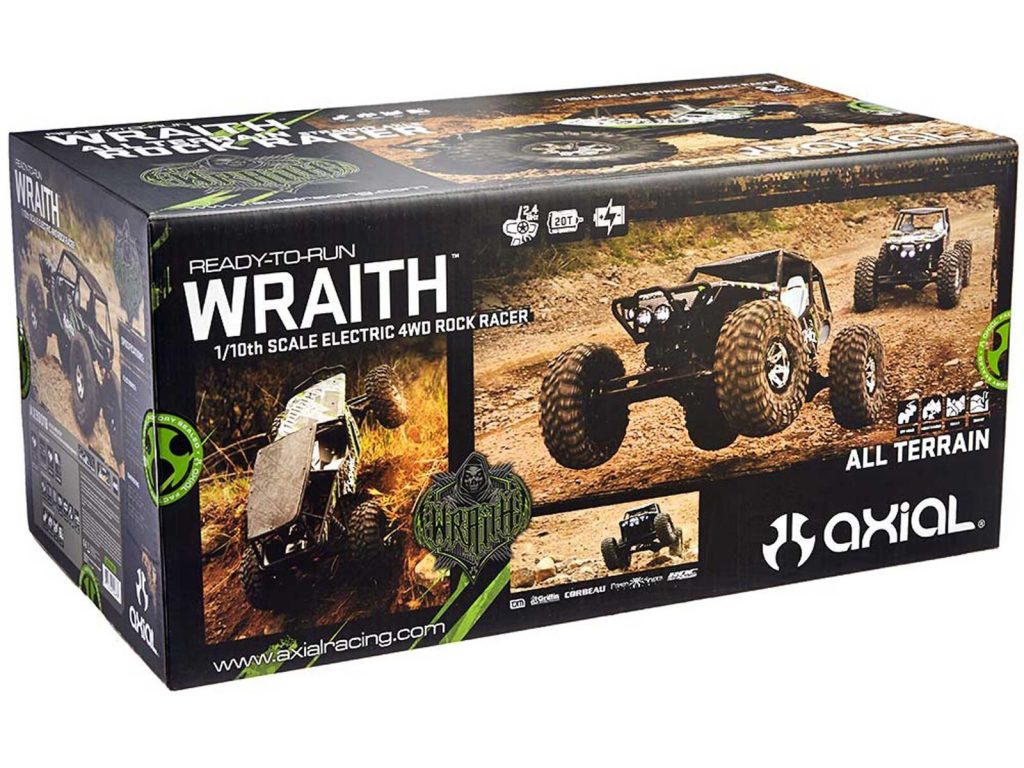
From the moment I unboxed the Wraith, I was hooked. This was more than an RC car—it was a scale off-roader with rugged capabilities. Its detailed roll cage, oversized tires, and durable suspension screamed adventure. Little did I know just how much time, money, and effort I would pour into making it a more capable crawler. Over the next two years, I ended up with three Wraiths in my collection, along with other vehicles based on the same platform.
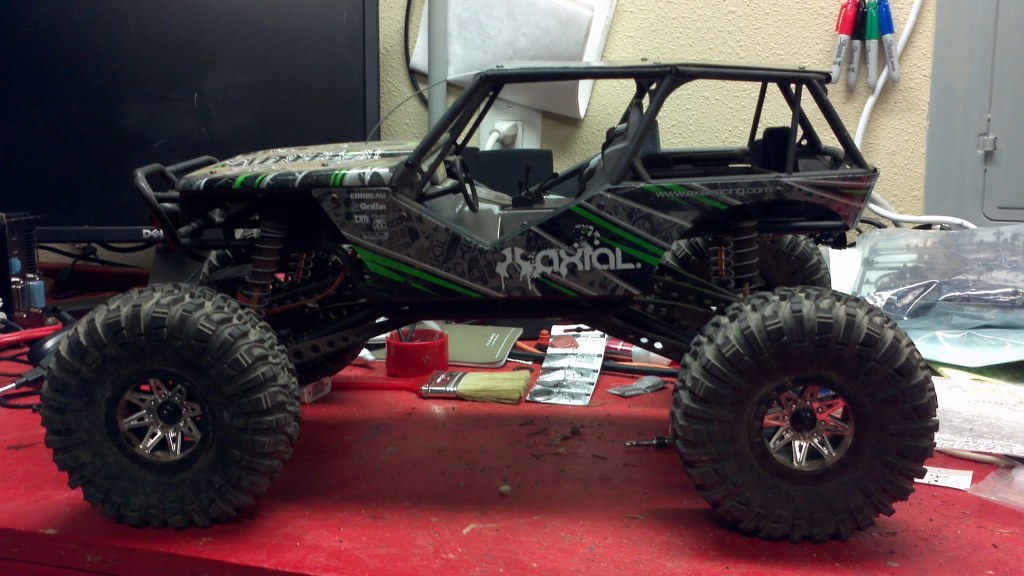
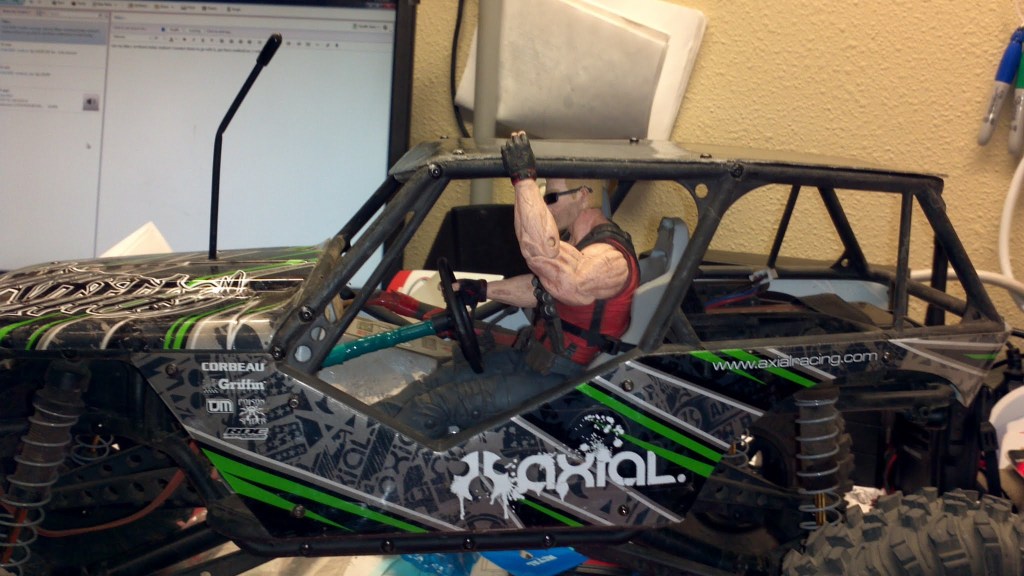
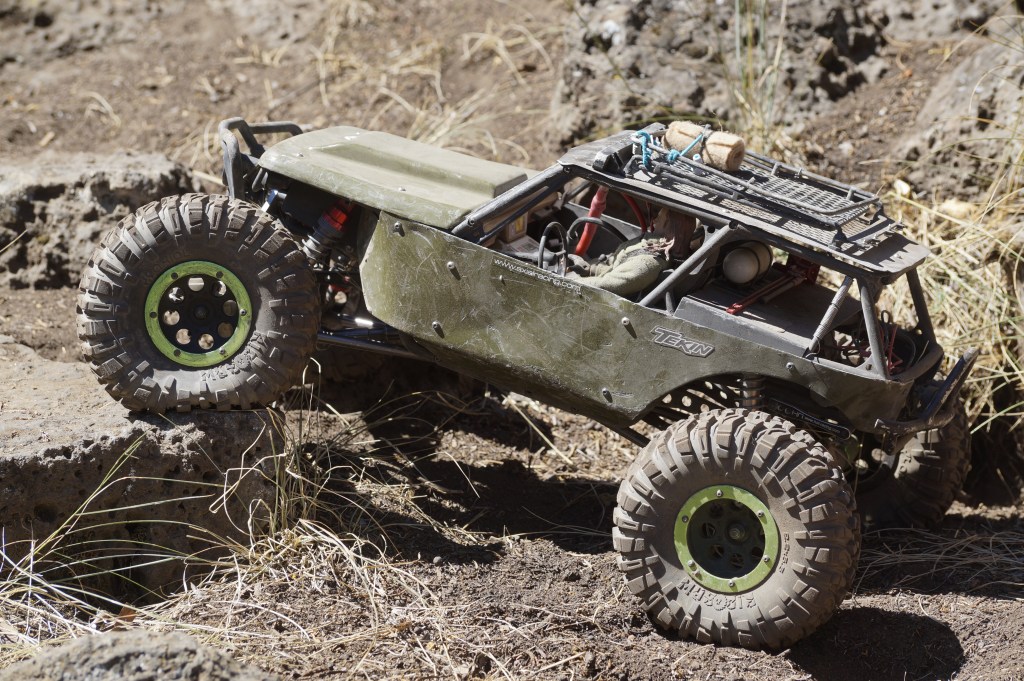
My first Wraith got the most attention. It wasn’t long before I was ordering alternate shock mount kits and adding a scale driver and accessories. My first driver? Duke Nukem—the infamous video game character known for his over-the-top attitude and one-liners. It felt fitting to have him at the wheel, taking on rugged terrain with the same bravado he brought to alien invasions—until I rolled the rig and his left hand snapped off, never to be seen again.
A New Kind of Challenge
The Wraith was a blend of speed and crawling capability. Designed as a rock racer, it featured a high-torque motor and four-wheel drive, allowing it to tackle rugged terrain at higher speeds than traditional crawlers. Its tube-frame chassis and larger tires made it versatile, but its wide stance and high battery placement led to challenges on the trails.
I remember my first major challenge: navigating a rocky trail at Sawyer Park in Bend, where the CORCRC folks gathered regularly. The Wraith’s suspension flexed over obstacles impressively, but its wide stance made it awkward compared to the narrower SCX-10-based rigs others were running. The battery’s high rear position affected the center of gravity, leading to frequent rollovers on steep climbs. I quickly realized I’d need to make some adjustments if I wanted to keep up.
Like many RC enthusiasts, part of the fun of owning a crawler is the potential for customization. The first thing I tackled was getting the battery weight off the back. With some creative adjustments, I moved it forward, sitting vertically across the width of the vehicle just in front of the dashboard, under the hood. This simple tweak dramatically improved the Wraith’s center of gravity.
The Thrill of Customization
Next came the motor upgrade. Looking for more torque, I turned to Holmes Hobbies and their TorqueMaster 35T motor, which provided the slow-speed control I needed for crawling. I paired it with a Holmes Hobbies Waterproof BRXL Speed Controller, designed for the rigors of trail running, even in wet conditions.
The customization didn’t stop there. I opened up the back end of the rig to fit a spare tire, adding both practicality and an aggressive look. I fabricated custom side panels from sheet metal and built durable bumpers to handle harder hits. To tackle the lava rock that was common in my area, I added a custom sheet metal bottom plate and rock sliders.

With the new motor’s torque, the stock drive shafts couldn’t handle the load, so I upgraded to steel shafts for better durability and performance. Of course, no crawler is complete without scale accessories. Over time, I added a functional scale winch, a toolbox, sleeping bags, bungee cords, and scaled firearms for those scale competitions where every detail matters.
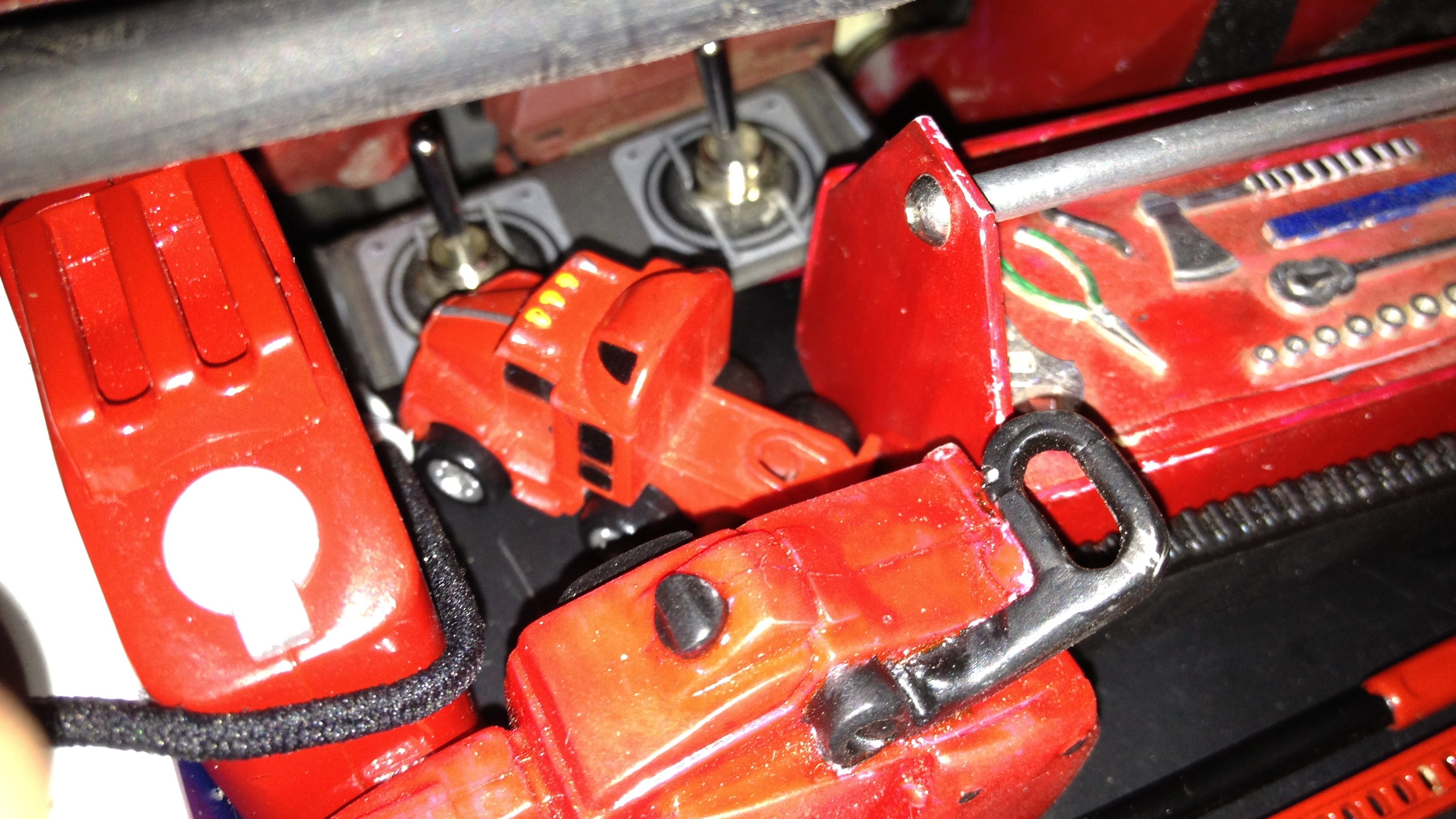
My favorite scale addition was installing a micro servo under the dashboard to create realistic steering wheel motion as the vehicle turned. However, the most significant performance upgrade came when I added four-wheel steering, controlled by a Spektrum DX6i stick radio. The throttle and primary steering were on the right gimbal, while rear steering was on the left. I also set up two switches for mixing, allowing me to switch between independent front and rear steering, four-wheel steering on the primary gimbal, or crab walk mode—all controlled seamlessly from the radio.
A Shift in Focus: Rock Crawling Takes Over
Rock crawling quickly overshadowed my other RC interests. While bashing had its thrills, it felt aimless without structured events or competitions. Crawling, on the other hand, was slow, technical, and methodical. The sense of community in crawling events, regular trail runs, and competitions kept me engaged like nothing else.
As my passion for crawling grew, so did the time and energy I dedicated to it. Crawling is not a hobby where you can power through obstacles. It demands patience, strategy, and an intimate knowledge of your vehicle’s capabilities. Eventually, crawling became more than a hobby—it was an obsession.
With all my focus on rock crawlers, I naturally became interested in full-scale crawlers. I wanted to know what it was like in real life. In the summer of 2013, I packed my gear and attended the Groundhog Rock Crawl competition outside Bend, Oregon. Watching the full-size rigs tackle rugged terrain was exhilarating, and I soon found myself wanting to take the plunge.
By December 2013, after months of searching and debating, I purchased my first full-scale crawler. Stay tuned for a future article where I introduce you to my full-scale rig—Thor!
— Coby R


 Rapid Rhino RC
Leave a comment